Choosing Wedding Music: A Guide to Ceremony, Cocktail Hour, and First Dance Songs
October 22, 2026 · 5 min read
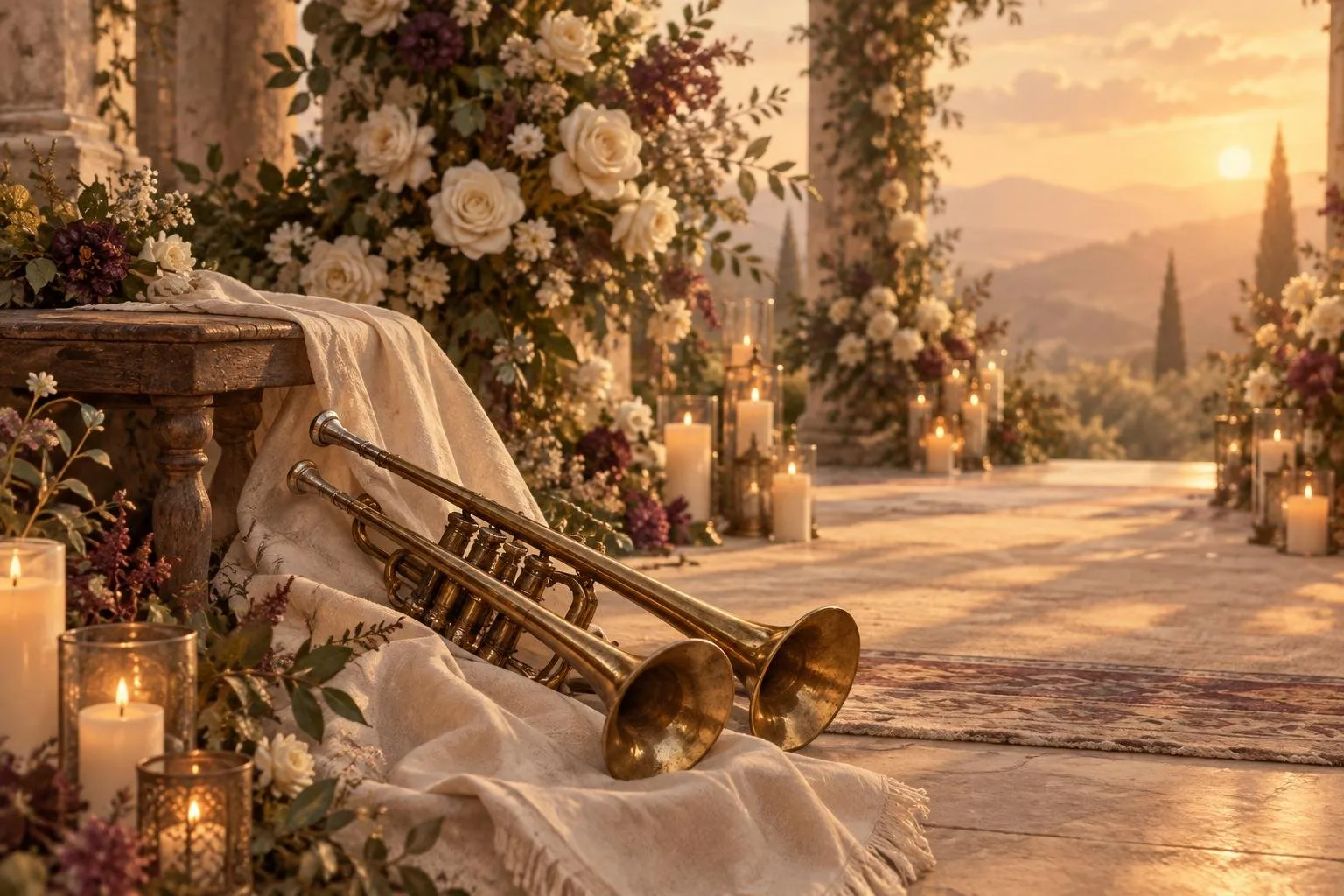
Of all the details that shape a wedding day, music may be the one guests remember most vividly. A well-chosen song can make a room fall quiet, bring a grandmother to tears, or send the whole dance floor into a happy rush. The good news is that choosing music doesn't have to feel overwhelming. Break it into three moments, ceremony, cocktail hour, and first dance, and you'll find the decisions become much easier.
Start with the feeling you want
Before you open a streaming app, decide how you want each part of the day to feel. Do you want the ceremony to be reverent and intimate, or joyful and a little playful? Should cocktail hour feel relaxed and conversational, or lively enough to get people moving? Jot down three or four words for each moment, such as tender, classic, bright, or nostalgic. These words will guide every song you consider and help you say no to tracks that don't fit.
Ceremony music
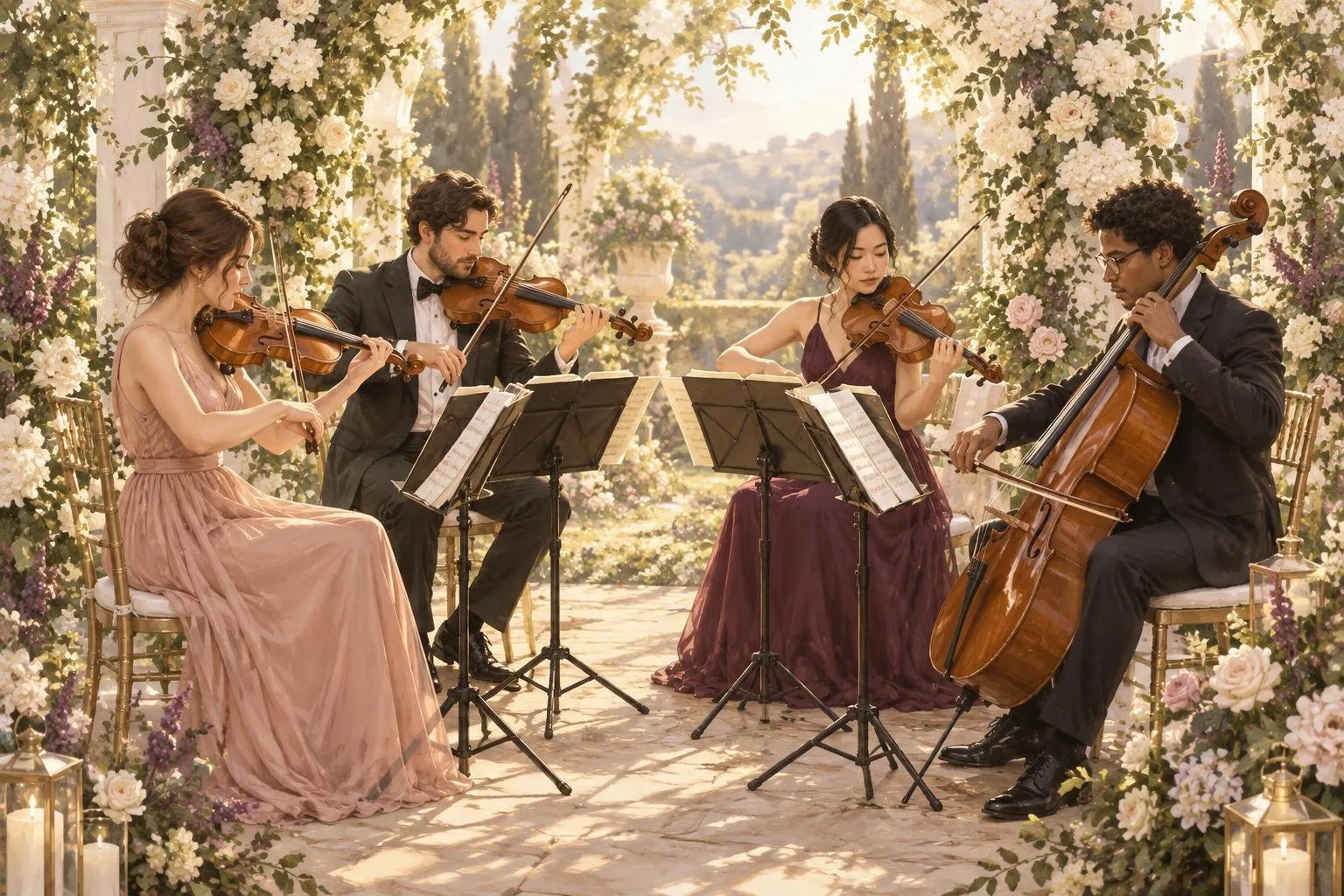
The ceremony usually includes several musical moments: a prelude as guests arrive, a processional for the wedding party, a song for the bride or the couple's entrance, and a recessional as you walk back up the aisle together. Many couples also add music during the signing of the register or a short solo during a reading.
- Prelude: Choose instrumental pieces that set a calm tone. Acoustic guitar, string quartets, and piano arrangements work beautifully and rarely include lyrics that compete with conversation.
- Processional: Pick a rhythm that gives your attendants a natural pace, usually slower than a dance tune. Keep the lyrics in mind, since they will be heard clearly in a quiet room.
- Entrance: This is your signature moment. Many couples choose a song with personal meaning, but make sure it still suits a formal setting.
- Recessional: Go for something upbeat and joyful. This is when guests usually cheer, so choose a track that feels like a celebration.
Ask your officiant or venue about any rules on volume, length, or content. Some religious ceremonies have guidelines on which music is appropriate, and some outdoor venues have noise limits that affect your timing.
Cocktail hour music
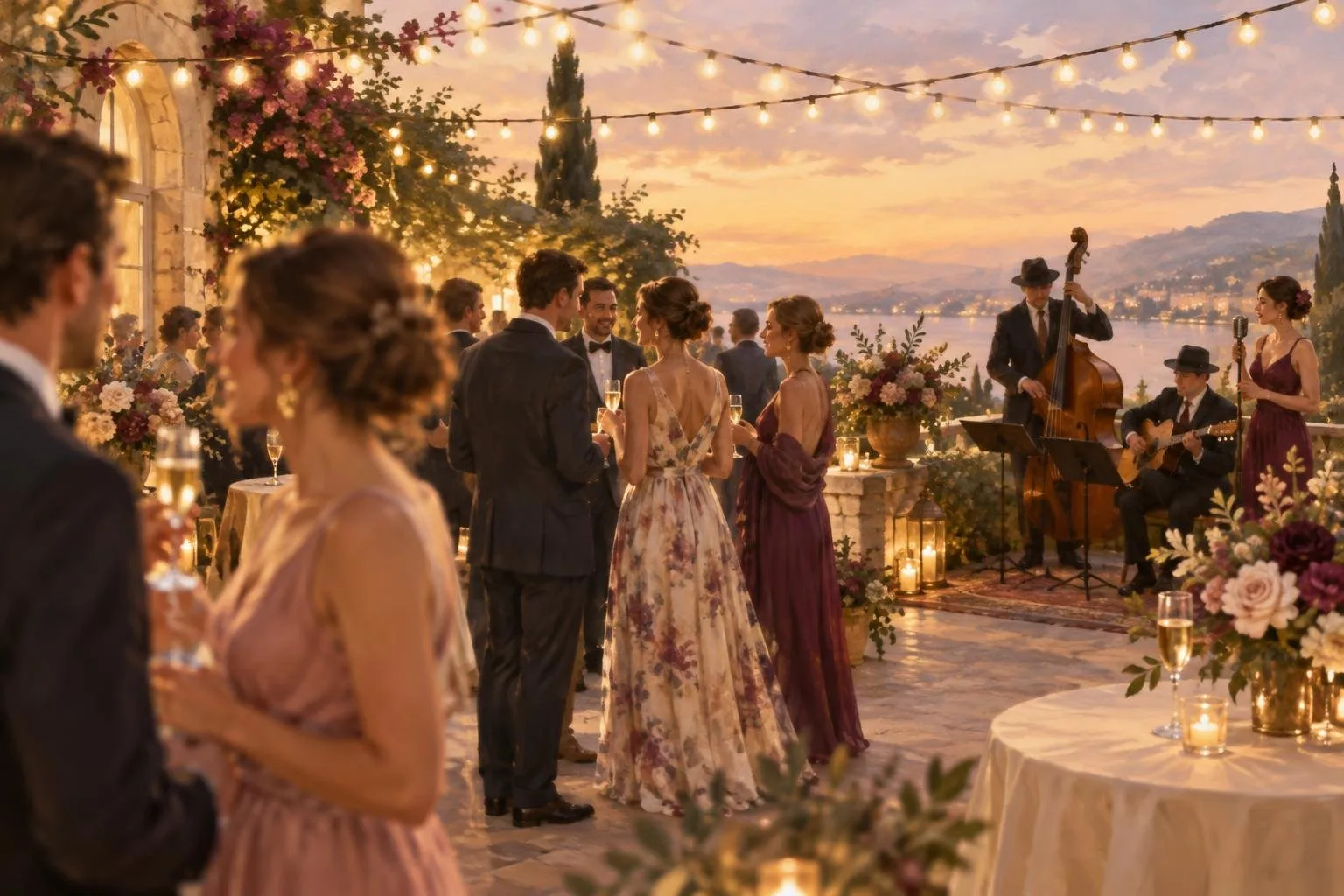
Cocktail hour is where background music does its quiet work. Guests are mingling, finding their tables, and maybe starting on a signature drink. The music should be present enough to add warmth but low enough that people can hear each other laugh. Plan for about 60 to 90 minutes of music, and build a playlist that moves gently from mellow to a little livelier as the hour goes on.
Mix genres you and your partner love, but keep the energy steady. Jazz standards, bossa nova, soul classics, and acoustic covers of favorite songs are all reliable choices. Ask your vendor for a volume check before guests arrive, and do a quick walk through the space to hear how the sound carries near the bar and the lawn.
Choosing your first dance song
The first dance is often the most personal song of the night. Some couples pick a track that has meant something since their first date. Others choose a song that simply makes them smile every time they hear it. There's no wrong approach, but a few practical questions can help you narrow the field.
- Can you dance to it comfortably? A slow, steady tempo works best for most couples. Fast songs can be wonderful, but they may leave you out of breath in your wedding clothes.
- Is the length right? Many songs run longer than a typical first dance. Choose a shorter version or a track that builds to a natural ending.
- Does the lyric feel like you? Listen closely to the words. A song that sounds romantic may carry lines that feel awkward in front of your families.
- Will you practice? Rehearse a few times in the space if you can, or at least in your living room, so the moment feels relaxed.
If you want to share the spotlight, consider a parent dance or a wedding party dance after the first dance. Many couples also invite guests to join in after the opening verse, which keeps the floor lively and cuts the attention down to a comfortable length.
Working with your DJ or band
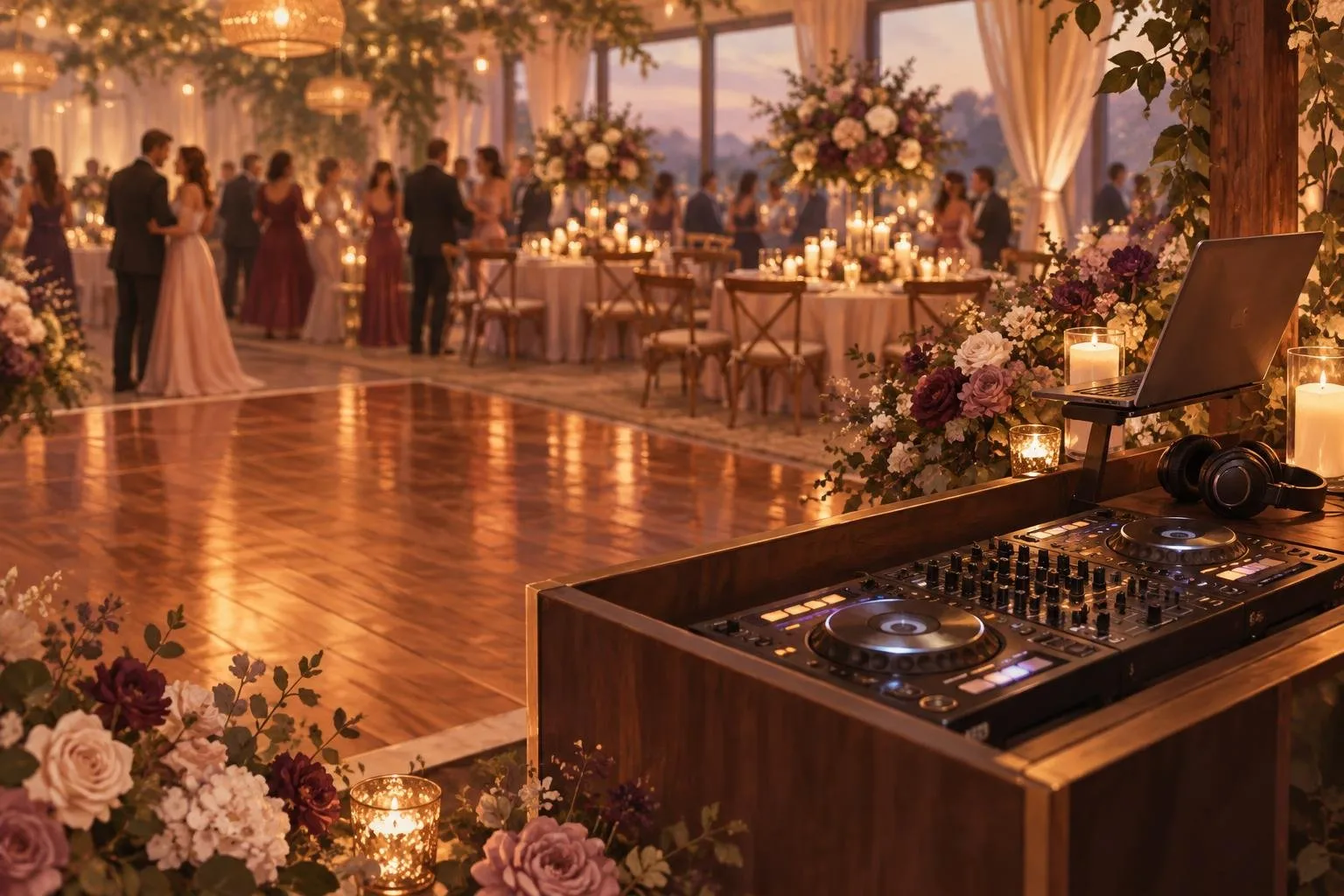
Whether you hire a DJ or a live band, the way you communicate matters as much as the songs themselves. Share your ceremony and reception timeline, your must-play list, and a do-not-play list that covers any songs or genres you would rather skip. A DJ can often cover a wider range of music and transitions, while a live band brings energy and the feeling of a performance. Some couples split the day, with a band during cocktail hour and a DJ for dancing.
When you meet with vendors, ask how they handle requests, who will act as the emcee, how they coordinate with your photographer and caterer, and what backup plan they have if equipment fails. Listen for clear answers and a calm, organized approach. Those are good signs you have found the right partner.
A simple music planning checklist
- Write down three to four feeling words for each part of the day.
- Choose ceremony songs for the prelude, processional, entrance, and recessional.
- Build a 60 to 90 minute cocktail hour playlist and test the volume at the venue.
- Shortlist three to five first dance songs and check their length and lyrics.
- Create must-play and do-not-play lists for your DJ or band.
- Share the full timeline with your musicians and the rest of your vendor team.
- Confirm the venue's noise limits and any ceremony music guidelines.
- Hold a final rehearsal for the first dance, and make sure a backup track is saved.
Music is one of the easiest ways to bring your personality into the day. Take your time, trust your instincts, and remember that the songs that matter most are the ones that feel like you two. Enjoy the process, and happy listening.